Performance Comparison and Selection Guide for High-Temperature Industrial Kiln Furniture Materials: Boosting Equipment Lifespan for Export Customers
29 11,2025
Technical knowledge
The selection of kiln furniture materials in high-temperature industrial kilns directly impacts equipment lifespan and production efficiency. This paper systematically compares the high-temperature resistance, thermal expansion coefficient, thermal shock resistance, and creep characteristics of materials such as cordierite, corundum, and mullite in an environment ranging from 1000ºC to 1300ºC. By combining real-world application cases and testing standards, it helps technical personnel in industries such as ceramics, metallurgy, and glass to make scientific selections, optimize process flows, reduce equipment failure risks, enhance market competitiveness, and achieve long-term stable operation.

Comparative Analysis and Selection Guide for High-Temperature Industrial Kiln Furniture Materials: Enhancing Equipment Lifespan for Export Customers
The selection of kiln furniture materials in high-temperature industrial kilns directly impacts equipment lifespan and production efficiency. This article aims to provide in-depth analysis of the core performance indicators of high-temperature kiln furniture materials for technical personnel and procurement managers in the ceramic, metallurgy, and glass industries.
Physical and Chemical Properties of Key Materials
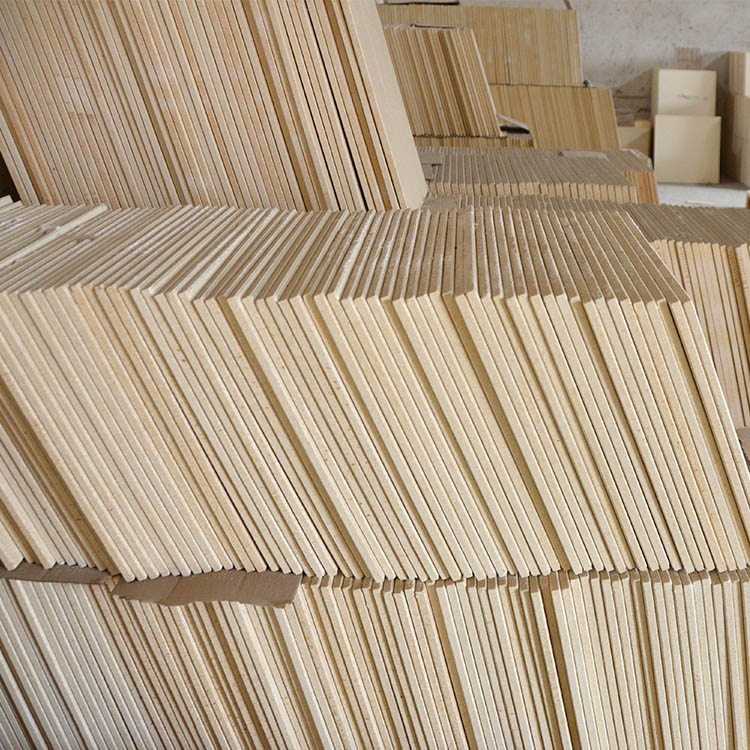
Let's first explore the physical and chemical properties of cordierite, corundum, and mullite. These materials are widely used in high-temperature industrial applications, and understanding their characteristics is crucial for proper selection.
- Cordierite: Cordierite has a relatively low thermal expansion coefficient, typically around 1.0 - 2.0 × 10⁻⁶ /°C in the temperature range of 1000°C - 1300°C. This low expansion coefficient gives it excellent thermal shock resistance. For example, in some ceramic firing processes, cordierite kiln furniture can withstand rapid temperature changes without cracking, which significantly improves the production efficiency.
- Corundum: Corundum is known for its high hardness and excellent high-temperature resistance. It can maintain its structural integrity at temperatures up to 1800°C. In the metallurgy industry, corundum kiln furniture is often used in high-temperature smelting processes due to its ability to resist chemical corrosion and high mechanical stress. Its thermal expansion coefficient is around 8 - 10 × 10⁻⁶ /°C in the relevant temperature range.
- Mullite: Mullite combines good high-temperature strength and thermal shock resistance. Its thermal expansion coefficient is between cordierite and corundum, approximately 4 - 6 × 10⁻⁶ /°C. In glass manufacturing, mullite kiln furniture is used to support glass products during the annealing process, ensuring uniform heating and cooling.
Performance Comparison in Practical Applications
To better understand the performance differences of these materials in real-world scenarios, let's look at some practical application cases. In a ceramic factory in Europe, they compared the use of cordierite and mullite kiln furniture in a continuous firing kiln operating at 1200°C. The cordierite kiln furniture showed fewer cracks after 50 firing cycles, while the mullite kiln furniture maintained better dimensional stability.
In a metallurgical plant in Asia, corundum kiln furniture was used in a high-temperature induction furnace. After long - term operation at 1300°C, the corundum kiln furniture showed minimal wear and tear, demonstrating its excellent high - temperature performance. However, its high cost is a factor that needs to be considered.
| Material |
High - Temperature Resistance (°C) |
Thermal Expansion Coefficient (× 10⁻⁶ /°C) |
Thermal Shock Resistance |
Creep Resistance |
| Cordierite |
1000 - 1300 |
1.0 - 2.0 |
Excellent |
Moderate |
| Corundum |
Up to 1800 |
8 - 10 |
Good |
Excellent |
| Mullite |
1000 - 1600 |
4 - 6 |
Good |
Good |
Standard Testing Methods
To accurately evaluate the performance of these materials, standard testing methods are essential. The thermal shock resistance test is commonly used to measure a material's ability to withstand rapid temperature changes. In this test, a sample is heated to a specific temperature and then rapidly cooled, and the number of cycles it can withstand before cracking is recorded.
The creep test is used to evaluate a material's resistance to deformation under long - term high - temperature and constant load conditions. A sample is subjected to a specific load at a high temperature for a certain period, and the amount of deformation is measured. These testing methods help users understand the performance of materials more objectively.
Selection Recommendations and Optimization Strategies
Based on the above analysis, here are some selection recommendations for different industries:
- Ceramic Industry: For processes with frequent temperature changes, such as fast - firing ceramic production, cordierite kiln furniture is a good choice due to its excellent thermal shock resistance. If high - temperature strength is also required, a combination of cordierite and mullite can be considered.
- Metallurgy Industry: In high - temperature smelting processes, corundum kiln furniture is preferred for its high hardness, high - temperature resistance, and chemical corrosion resistance. However, for some less demanding processes, mullite can be a more cost - effective alternative.
- Glass Industry: Mullite kiln furniture is suitable for glass annealing processes, as it can provide good support and maintain dimensional stability during the slow cooling process.
By following these selection recommendations, users can solve common problems such as kiln furniture cracking and deformation, optimize the production process, and reduce equipment failure risks.
When making your selection, choosing Zhengzhou Tianyang can provide you with internationally recognized high - quality refractory material solutions. We are committed to helping you make the right choice and achieve long - term stable operation in your production.




 <#else>


